
Happy Chinese New Year Yang Water Dragon

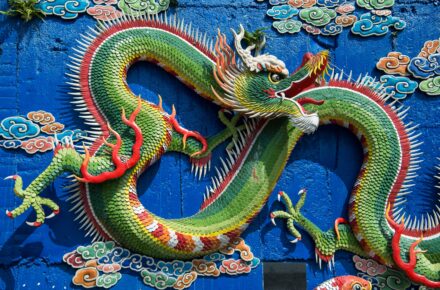
According to the Chinese lunar calendar, the New Year festival is celebrated each year on the second new moon after the winter solstice – falling this year on January 23, 2012.  And so begins the celebration leading up to the beginning of spring.  This year we welcome the energy of the Yang Water Dragon (Ren Chen) and prepare to be mesmerized by the only Chinese zodiac animal that is not of this earth. The ancient symbol of imperial authority, mystical Dragon dwells in the realm of water – oceans, rivers, mist and rain.  In agricultural terms, it brings spring thunder and showers to nourish the crops, and is therefore associated with power, transformation and good fortune.

From a Feng Shui perspective, Dragon landforms represent mountain ranges which protect villages, homes and businesses from all manner of invading armies.  Energy or ch’i follows Dragon veins from the highest elevations right down to the sea where it pauses to bestow blessings on all who gather there.  The guardian of temples and kingdoms for thousands of years, Dragon is considered both benevolent and powerful, and not to be taken lightly.  Mountains have high peaks and low valleys with precipitous turns along the way.  In a Dragon year, we are cautioned to stay alert for blind curves and shifting rocks and to keep our eyes open for important travelers we may meet along the way.

Dragon is magnificent and unpredictable and not the sort of creature who will linger if you lag behind.  He dwells above it all and has the vision to see beyond the horizon where others fear to tread.  2012 promises an appetite for social, humanitarian and political reform as well as the energy and enthusiasm necessary to make it happen.  Take advantage of opportunities for growth this year and rest when you can.  The Dragon is happy to bring you along if you can keep pace.

Wishing you the brilliance, energy and spirit of the Yang Water Dragon – and as always, good ch’i,


Diane Gallin, CFSC

Wind and Water Feng Shui Consulting

www.windandwaterfengshui.com

Email   diane@windandwaterfengshui.com Telephone   727-459-1459


Winter Solstice

December 22, 2011 marks the Winter Solstice in the northern hemisphere, a turning point in the natural world for the seasonal passage of time.  Most of our winter holidays are celebrated during the time of the solstice when temperatures drop, the sun is low in the sky and we experience the longest nights of the year.  In China, the Winter Solstice is known as the Dong Zhi or “extreme of winter.”  This holiday honors the end of the harvest and return to hearth and home.  In agricultural societies and the practice of Feng Shui, winter is associated with completion, storage and conservation of energy, until springtime arrives with the promise of a new beginning.

The most yin time of year from a Feng Shui perspective, winter is associated with still water, cold, the moon, silence and darkness. In the phases of the Five Elements and Traditional Chinese Medicine, the season of winter relates to the kidneys, water ch’i and the emotion of fear.  It is not surprising that human beings gravitate to shelter and warmth during this season, gathering emotional support and comfort at the bleakest time of the year.  Watching daylight fade more swiftly, early Neoliths surely wondered when and if the sun would return to warm the earth. In fact, their efforts to summon the sun through ritual and celebration at the year’s turning gave birth to the winter holidays we celebrate today.

But in the spirit of the holiday season, perhaps some of our celebrations have pushed us too far to the yang side of the equation. Rather than honoring the quiet, introspective side of our nature in winter, we create expectations that bring even more stress to our lives.  The holidays become mirrors of the same hectic schedule we keep all year long.  In winter, we are supposed to rest and reflect – taking comfort in warm foods, loving companionship, and stillness.  Rather than filling our days with activity, it is wise to acknowledge the cycles of nature and passage of time, allowing emotions just under the surface to emerge and pass through.

This holiday season, give yourself the gift of melancholy.  Set aside time to remember those who came before you and honor only the traditions that touch your heart.  Attempt to put your fears about the future at rest and find quiet time to be at peace with who you are and where you have been, knowing that the sun will always return to warm you.

Wishing you good ch’i,

Diane Gallin, CFSC


Living History

autumn trees

I recently visited an art exhibit entitled The Life and Death of Buildings.”  It was a fascinating narrative of photography, painting and sculpture that captured the essence of buildings around the world over many centuries.  From the mundane to the magnificent, these structures were described as living artifacts rather than collections of carefully placed bricks and mortar.  In Feng Shui, we recognize the buildings we occupy as valuable partners on our journey, so I was moved to read “A building is a thing. Rooted to the ground, shaped by human hands and by time, in turn it shapes lives – sometimes for generations or even in one civilization after another.”

We know that our modern home and office buildings provide not only shelter from the elements, but a sense of purpose and belonging that early hunter gatherers may have longed for.  It is worth remembering that while these buildings help to imprint and create memories for us, they retain the energy of our activities in those places as well.   Long after the laborers have packed away their tools, we continue to create a unique structure.  The history of a building is updated every day that we celebrate, work, gather, share and enjoy our time there.

This holiday season, spend a moment in gratitude for the buildings that surround you and honor your part in their living history.

Wishing you good ch’i and a very happy Thanksgiving,

Diane Gallin, CFSC

Wind and Water Feng Shui Consulting


www.windandwaterfengshui.com

Email   diane@windandwaterfengshui.com Telephone   727-459-1459


Change is Coming

Charleston home

Now that autumn is here, you’re probably spending more time in and around your home.  That’s a good thing if you feel nurtured there.  If not, take a look at the Feng Shui of your surroundings to see if there are improvements you can make.  We all know how the foods we eat and lifestyle choices we make play an important part in the quality of our physical health.  But from a Feng Shui perspective the quality of energy (ch’i) around us plays just as important a role in our well-being and quality of life.

We have all been to places with bad Feng Shui.  Dilapidated buildings, chaotic roadways, poorly tended homes and ravaged landscapes.  Sadly, the flow of ch’i in these places has been disrupted, resulting in deterioration and stagnation. These once thriving communities become more yin in nature, with closed schools and businesses and residents who seem to dwell in the past. Time stands still until someone comes along to rebuild, revamp and revitalize the community, and the pendulum swings back to yang.

The quality of energy in our own surroundings can impact psychological health even when the picture is less dramatic.  A dead end street, blocking wall, leaking pipe or dreary room creates stagnation that affects every person in the home and should be remedied quickly. For starters, light and air movement are good indicators of healthy ch’i.  On a recent walk through historic Charleston, South Carolina, I learned that many city homes were built with expansive sleeping porches or piazzas on the southwest side of the building, facing the prevailing winds and open water.  Even though streets followed the old Roman grid system and homes were built close together, piazzas capture cool and benevolent breezes (ch’i) in this subtropical climate.  The front door dictates the building’s address but the mouth of ch’i is definitely through the piazza.

Before autumn yields to winter, take a walk through your home and determine where the most dynamic areas are located.  Where do people congregate and which rooms are avoided?  Are there spaces that are cluttered, dark or sad?  If so, remember that in Feng Shui even these areas represent a part of your life and may just be the part that needs revitalizing. Try opening windows and doors and using color, light, sound and inspiration to lift the energy there.  In nature, wind and water flow through, around and over stagnant areas bringing life-giving ch’i to the landscape.  If you are receptive to growth and change, you might just be part of your own solution.

Wishing you good ch’i,


Diane Gallin, CFSC

Wind and Water Feng Shui Consulting


www.windandwaterfengshui.com

Email   diane@windandwaterfengshui.com Telephone   727-459-1459


Feng Shui for Children

The most rewarding aspect of my job as a Feng Shui advisor is teaching people how the environment impacts their lives and what they can do about it. As the summer season comes to a close, many of my clients are preparing their children to begin or return to school.  The transition from carefree days with family and friends to a more structured, less familiar school environment can seem abrupt and even frightening for young children.  Even high school and college bound children can experience anxiety about unknown social and academic expectations and demands on their ever-shrinking supply of time. 

As parents, teachers and caregivers, there are things we can do from a Feng Shui perspective to help ease this transition and prepare children of all ages for a successful year. Young children rely on their elders for nurturing while teens require more discreet guidance as they slowly pull away toward independence.  Educators and their institutions have an important role in our children’s lives, but  intellectual curiosity and self-confidence are engendered at home.  Here are some Feng Shui ideas for you to help them on journey.

  The bedroom is a place of rest and respite for children, so I encourage you to take a careful look at this space.  Is the bed located on a solid wall behind a sturdy headboard?  This is your child’s “mountain” of support and proper placement helps provide them with stability.  Ideally, they will be able to see the room’s entrance from the bed, which eases anxiety about the comings and goings of people in their lives.  Keep the area under the bed clear of anything that can disrupt a peaceful night’s sleep. Lie down in the bed and note what the child sees upon waking.  Is there a window with a view, a blank wall or a pile of toys or laundry? The first thing they see in the morning can set the stage for the day, so help lift their energy with something that inspires.

  What is the color scheme of the room?  If you don’t already know your child’s personal element and best compass directions (see Four Pillars), keep the palette neutral (pale blues, greens, pinks, yellows) to encourage peaceful sleep and reserve the more dramatic colors (dark reds, greens, oranges) and patterns for recreation areas.  In Five Element theory, saffron/yellow represents Earth and stability; shades of green represent Wood growth and expansion; red/purple represents Fire excitement and passion; white/gray represents Metal and contraction; and dark blue/black represents Water and fluidity.  Each of these colors/elements is fine in a child’s room, but balance them carefully for moderation.

  Check the lighting in your child’s bedroom.  Overhead ceiling lights tend to be too harsh and imposing for a bedroom and they cast a gloomy shadow.  Natural light from windows and full spectrum table or floor lamps help to lift the energy in a bedroom.  Young children might like the glow from a soft nightlight, as long as it is not placed next to the bed. If they go to sleep at night with curtains drawn, you might open them before you go to bed so they wake to the natural light of sunrise. 

  Remove televisions, computers and electronic equipment from children’s bedrooms, regardless of their ages.  Elevated electromagnetic fields from these appliances interfere with sleep patterns and children are significantly more vulnerable to their harmful health effects than adults.  If older children also use the bedroom to study, be sure to turn all electronics off at night.  Digital alarm clocks emit high EMF levels, so move them at least 6 feet away from the head of the bed.  

  Add a living plant to your child’s room to help filter the air.  Plants represent growth, springtime and new beginnings in Feng Shui – an optimistic energy for a child’s bedroom.  Peace lily, philodendron and ivy plants are inexpensive, easy to care for and bring a little nature indoors. 

  If there is a desk in the bedroom, try to ensure that your child has more open space in front of them than behind to encourage opportunities and broaden their outlook.  If space constraints dictate that the desk is placed against a wall, hang an inspirational scene or picture above the desk at eye level while the child is seated. If their back is to the door while seated at the desk, place a small “rearview” mirror in front of them.  Bookcases should be accessible even to young children to encourage reading. Rotate books and subjects every few weeks to keep them interested.  Wall shelving should be hung away from the bed and desk areas to prevent oppressing energy above the child’s head. 

  Artwork in your child’s bedroom should stimulate creativity, evoke security and make them smile.  Sturdy mountains or team pictures represent support to a child.  A colorful map of the world or a picture of the ocean or outer space creates curiosity about the unknown.  A whimsical hanging mobile or happy vacation photo can lighten their mood and remind them to have fun.  Create a soothing sanctuary for the stressed out child and ignite a spark of imagination for the unmotivated. 

  Create space for any awards, trophies, diplomas or achievements in your child’s room to honor their accomplishments. If there is a mirror in the bedroom, be sure to hang it at the child’s level so that it reflects their head and six inches above, which represents their potential.  Remember to adjust this as they grow.  In order for a child to feel important they must first see who they are. 

  Ask your child to share their ideas with you about their room.  I have found that children naturally gravitate to the colors and elements that nurture them, so listen carefully to what they have to say.  If they are unruly, timid, sad, fearful, gregarious or agitated, there are many concrete steps you can take to help them find balance.  Feng Shui and Four Pillars astrology provide a roadmap for this.  Please let me know if I can help. 

Wishing you and your children good ch’i,

Diane Gallin, CFSC

Wind and Water Feng Shui Consulting

Wind and Water

www.windandwaterfengshui.com

Email   diane@windandwaterfengshui.com    Telephone   727-459-1459


Letting Go


Have you ever floated on a river or a lake allowing only the current to guide you?  You’re not quite sure how deep the water or exactly what awaits you around the bend, but for that moment in time you simply relinquish control and drift.  Unaccustomed to this weightlessness, you take a leap of faith, close your eyes and give in to the unknown.  The water takes on the role of master and commander and you trust that it knows the way – and it does.

Water is a very powerful element in Feng Shui Five Element theory.  It is the element associated with our career, life path and destination.  When the proper amount and type of Water energy is found lacking in a building, residence or community, energy stagnates, business falls short of expectations and people feel stuck.  In Traditional Chinese Medicine, Water is linked to our emotions and is vital to kidney health, which keeps all other organs in balance.  While Earth provides the stability we need to focus and stay grounded, Water keeps us moving, uncovering what is hidden beneath the surface and exposing what is possible.  Essential to growth, inspiration and mobility, Water can also lap away at our energy and extinguish a flame that burns too brightly. In summer, Water (the element associated with winter) helps to cool our emotions and soothe our spirits.  A day at the beach puts our troubles in perspective, mostly washing away the worries we carried with us.

This month, I am inspired by the journeys of my clients, family and friends whose lives have taken an unexpected turn. This is the realm of Water.  Our plans and lists and notions of what should be can change in a moment and catch us unaware.  Fear sets in and we try swimming upstream or against the current for awhile, working twice as hard to go half as far. We forget that in its march to the sea, Water finds its way over, under and through obstacles, regardless of how long the journey.  Water yields only long enough to change course, gather momentum and continue. 

This summer I wish you the courage, wisdom and fluidity of Water energy as you navigate your journey.  As always, I am here to guide you along the way.

Wishing you good ch’i,

Diane Gallin, CFSC

Wind and Water Feng Shui Consulting

Wind and Water

www.windandwaterfengshui.com

Email   diane@windandwaterfengshui.com    Telephone   727-459-1459


New Beginnings


tomato plants

We often associate beginnings and endings with the arrival of the new year in January or February. But I think our more noteworthy milestones are reached in the month of June.  Calendars fill with weddings, graduations, religious rites of passage, award ceremonies and sporting banquets. Many students trade academia for the workplace and others at the end of their careers choose to retire.  Distant travels are planned and families gather together for reunions.  In the United States, most home sales occur over the summer, when we pick up roots and plant them somewhere else while the ground is thawed and fertile. 

In Feng Shui, springtime is associated with Wood - the element with the most potential for growth.  Wood represents new beginnings, family, friends, community, and optimism.  It is associated with the East – the direction of the rising sun and the promise of a new day. In nature, each season has a purpose and spring represents what is possible. It seems appropriate that high school graduates finally have the opportunity to harvest seeds of knowledge planted so many years ago in kindergarten.  Brides and grooms optimistically embark on their future together.  We finally get to uncover the compost pile and plant a summer vegetable garden, while young families feather their nests for new offspring.  College graduates loosen their ties to family and transition toward independence.  Everywhere we turn, we are reminded that ”every new beginning comes from some other beginning’s end.”

If you are feeling unsettled by all the changes around you, look to nature for optimism and imagine that with change comes hope.  This may just be the start of something big.

Wishing you good ch’i,

Diane Gallin, CFSC

Wind and Water Feng Shui Consulting

Wind and Water

www.windandwaterfengshui.com

Email   diane@windandwaterfengshui.com    Telephone   727-459-1459


Natural Beauty


Magnolia

Have you taken a walking tour of your home, property and business lately?  I recommend this practice several times a year to evaluate the condition and usefulness of items in my clients’ surroundings.  These self-led tours are as enlightening as they are practical, since we usually discover things that send a contrary message to the one we’re hoping to advance.  The clock that stopped keeping time in the Career sector, a leaking faucet in Prosperity or the broken mirror in Relationships all conspire to slow our progress and sabotage goals.  In addition to the practical applications of this exercise, I also advise taking inventory of how many beautiful and inspirational items surround you.  In Feng Shui, mundane cures include moving furniture, repairing what is broken and clearing overgrown landscaping.  But there is much more to creating a dynamic and purposeful environment.  And while Feng Shui doesn’t dictate aesthetics, they certainly play an important role in your daily life.

Studies have shown that our energy changes when we focus attention on uplifting images.  Just as a leisurely stroll through a botanical garden or a walk in the woods lifts our inner ch’i, observing a pleasant view through a window, an inspirational picture or vibrant color palette elevates our mood.  At that time, we tend to focus on the more pleasurable aspects of our lives rather than how hard we’ve worked to get there.  Sometimes, in an attempt to make our homes and businesses more functional we deprive ourselves of the finery we reserve for special guests.  When was the last time you rolled out the red carpet for you?

Adding a small plant or simple flower arrangement to your desk can change the dynamic of a busy office.  Spring blooms or even green branches from your yard make a wonderful natural display .  A collection of beloved photographs, interesting fabrics, textures and colors all enhance our living spaces, regardless of how grand the scale.  On the subject of planting flowering trees outside university buildings in 1926, Beatrix Jones Farrand, a founding member of the America Society of Landscape Architects, wrote, “We all know education is by no means a mere matter of books, and that aesthetic environment contributes as much to mental growth as facts assimilated from a printed page.”  Quite simply, we work, sleep, eat and grow better in pleasant surroundings.  Why not turn on your favorite music, light some candles and set out the fine china for your next meal?  Invite yourself to enjoy the beauty that surrounds you.    

Wishing you good ch’i and beautiful surroundings,

Diane Gallin, CFSC

Wind and Water Feng Shui Consulting

Wind and Water

www.windandwaterfengshui.com

Email   diane@windandwaterfengshui.com    Telephone   727-459-1459


Celebration


We often think of good Feng Shui in terms of creating quiet, peaceful living areas.  But negative energy feeds on stagnation, and our day-to-day predictable routine can lead to an environment that is too yin in nature.  One way to enhance the ch’i (energy) of your home or business is to create a festive (yang) atmosphere in your surroundings, then invite others to celebrate with you.  Buildings hold the energy of people who spend time there, so the vibration of activity from happy occasions leaves a positive imprint that lingers. 

When we entertain, play music, games or share food and laughter with friends and family, we actually help to dispel unlucky ch’i, improving our mood and outlook.  In Feng Shui, attending weddings, birthday parties and banquets is considered very auspicious, since the guests as well as the celebrants at these events benefit from all the positive energy surrounding them.  In fact, it is recommended for someone suffering from bad luck to seek out these occasions, since happiness is contagious and joyful people are more optimistic. 

You don’t need to wait for a special occasion to open your home or business for a celebration.  Go ahead and plan a small gathering of friends for dinner and conversation.  Schedule an open house for your business and invite the community to share in your good fortune.  You might even arrange a block party or a big, noisy celebration around a sporting event or theme.   Include children whenever possible, since their creative and cheerful dispositions lend another dimension to your perspective.  Just be sure to include music, laughter and happy people. 

Wishing you much happiness and good ch’i!

Diane Gallin, CFSC

Wind and Water Feng Shui Consulting

Wind and Water

www.windandwaterfengshui.com

Email   diane@windandwaterfengshui.com    Telephone   727-459-1459


To Touch the Heart


Ancient Chinese sages had a word for the mutual attraction between two people.  Hsien means “to touch the heart.”  Represented by the symbol of a lake over a mountain, these elements, like good relationships, are separate and unique but exist in nature because they provide something the other needs.   They complement each other.  In Western Feng Shui, the area of your building and property associated with Relationships is the far right corner (from the front door.)  It represents your marriage, romantic partners and business liaisons.  Anyone you regularly spend time with is influenced by the energy in this space.  One of the first things to consider in evaluating the Relationship area is what the space is used for.  Is the far right corner (from the street) of your property accessible and inviting, or is it remote and uninspiring?  Property that slopes away, a single chair, thorny plants or a “dead end” sign may be an indication of how well your relationships are going.  Is there a bathroom in this sector of your home or office “draining” romance from your life, or perhaps a fireplace or electrical utility room “heating up” discussions?  Is the area architecturally missing from your floor plan or sealed off from the living and working spaces, effectively disconnecting your bonds with others? 

On Valentine’s Day, red roses and heart-shaped boxes of chocolate are commercially used to evoke romance.  Feng Shui uses the color pink, representing receptiveness and nurturing, artwork featuring couples, soft lighting and comfortable seating to attract and maintain relationships.  In the office, a picture of two or more people accomplishing something together (sailing a boat, shaking hands, or scaling a mountain) represents the spirit of cooperation necessary for strong business relationships.  Solitary images or representations of conflict (stormy seas, battlefields, cactus plants, etc.) are counterproductive.

Since the New Year is a good time to reevaluate everything you might be holding onto, you may want to decide whether to carry all your relationships with you into the future.   Some of them may represent emotional clutter in your life, which is just as harmful as the physical kind.  Take the time now to cultivate the relationships you want to flourish in the New Year, and distance yourself from those that weaken or diminish you.  

Wishing you a Happy Valentine’s Day, an open heart and good ch’i,

Diane Gallin, CFSC

Wind and Water Feng Shui Consulting

Wind and Water

www.windandwaterfengshui.com

Email   diane@windandwaterfengshui.com    Telephone   727-459-1459